

3 things to teach your child to respect your senior companion's needs
As your four-legged friend grows older, he comes into less contact with humans and withdraws from the family. This can be unsettling for the children in the household: they may have been used to playing with an energetic dog or cat, with no arthritic pain or vision or hearing problems, but now they have to learn to respect their companion's new needs.
Rather than reacting after an accident, it's better to take the initiative to avoid any unfortunate altercations.
Here are three ways to maintain a peaceful home environment as your dog or cat ages.
1. Teach your child to "read" his partner's emotions
Teaching a toddler to read the emotional state of a dog or cat can be tricky, but older children are more than capable.
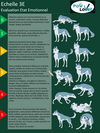
A few signs may indicate that your companion is uncomfortable or anxious:
- a tense mouth, a sudden interruption in panting
- look at the child in the corner
- goes away when stroked or cuddled
- lick your lips
- lower your ears
- lease
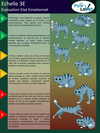
For cats, the signs can be more subtle:
- tail wagging, with a rhythm that increases with annoyance
- ears lowered
- lowering vibrissae
If your child is too small to observe these signs, always stay with him/her when interacting with your senior companion.
2. Warn your child: never disturb a sleeping animal
You know the old saying "don't wake a sleeping cat"? Well, it's true for dogs too!
On a more serious note, it's important at any age to learn that a sleeping cat or dog should be left alone. This is even more important when the animal is elderly: he/she hears less well and may therefore be surprised when suddenly awakened. He/she may suffer from arthritic pain and be more anxious: his/her reactions can be unpredictable in such a context.
It may sometimes be necessary to create a corner inaccessible to children, so that your companion can rest undisturbed.

3. Encourage your child to ask your partner's permission before interacting with him/her.
As they age, our dogs and cats are less inclined to play, and less able to endure play. It's important to always allow them to interrupt an interaction as soon as they feel the need (during play, a brushing session...) and above all not to pursue them. A very interesting technique to teach them is the "Pat-Pet-Pause" or "Propose - Caress - Pause":
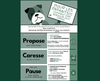
https://www.facebook.com/NobodysPerfect.Educationetcomportementcanin/posts/je-suis-hyper-fiere-de-vous-montrer-la-version-fran%C3%A7aise-du-pat-pet-pause-de-the/297860259417689/
The relationship that develops between child and pet is unique. It's important to try to preserve it throughout the life of your child and your companion.